Sunday, September 29, 2019

Derek Oland Born In Saint John, New Brunswick - September 29, 1939

September 29, 1939
Derek Oland
(Photo;moosehead.ca)  
Born in Saint John, New Brunswick, Canada.
Derek Oland is the Executive Chairman of Moosehead Breweries Limited with corporate offices and brewery located in Saint John, New Brunswick, Canada. Moosehead Breweries has been sponsoring auto racing in the Maritimes since 1970, contributing greatly to motorsport in Atlantic Canada. The Brewery helped to build Atlantic Motorsport Park and has sponsored the Moosehead Grand Prix on the streets of downtown Halifax. As President of Moosehead, Derek Oland has been the spark behind the breweries huge interest in motorsport. Derek was inducted into the Canadian Motorsport Hall of Fame in 1995.

Canadian Motorsport Legend Harvey Lennox Dies - September 29, 2014

October 21, 1929 - September 29, 2014
Harvey Lennox
Born in Lanigan, Saskatchewan.
 Canadian Motorsport Hall of Fame and London Sports Hall of Fame member and one of Canada's greatest race car drivers, passed away on September 29, 2014, at Chelsey Park Nursing Home, London, Ontario, Canada, in his 85th year.

The London motorsport legend, famous for driving his signature super modified vehicle 'Tammy 10', won 182 times in feature races at tracks in Ontario and Michigan from the 1950s through the '70s.

Lennox won five international stock car championships and three national titles and was the top driver at numerous tracks. Early in his career Harvey was the scourge of the dirt tracks that dotted Southwestern Ontario. He was big news at ovals such as Delaware, Nilestown, Ridge Raceway, Checker Flag in Windsor, Tilbury, Warwick, Tillsonburg, Sarnia Glendale to name some of them. It seemed every town had a track. Much of the time races were held on tracks at the fairgrounds.

Along came paved asphalt tracks, corners were widened and safety features installed as conditions improved. The dirt tracks eventually closed up with operations at Delaware, Flamboro, Bridgeport, CNE Toronto, Cayuga and Oswego, N.Y. taking over. Cars improved and were made to go faster and there was Harvey among the leaders again. Harvey took on all comers and cultivated some great rivalries. Who can forget the duels between him and Jack Sharpe in Lobo 1 or with some other leadfoots like Bill Rouse, Jimmy Howard, Trip Trepanier, Ron Pearn, Ted Hogan or Don Biederman?

In 1961, he won a five-mile feature at Harewood Acres, the first time super modifieds were contested on a Canadian road course.

Lennox was inducted into the Canadian Motorsport hall of fame in 1995 and the London Sports hall of fame in 2011. He is also a member of the Flamboro Speedway's hall of fame.

Saturday, September 28, 2019

Ron Fellows - Tribute Page

September 28, 1959
Ron Fellows
(Photo; Windsor Public Library)
Born in Windsor, Ontario, Canada.
Canadian Motorsport Hall of Fame member, accomplished SCCA Trans-Am, IMSA, and American Le Mans Series driver, and a NASCAR "road course ringer".

Fellows at the age of 4 he became interested in auto racing with his family. He began his career in Karts, which lead to Formula Ford 1600 and Formula Ford 2000. When funds for these projects ran low, he left racing for a 9 year stint as gas pipeline worker. Fellows returned to the track in the 1980s with help from driving school instructor Richard Spenard. He made his professional debut in 1986 in the Player's GM Challenge, driving a showroom stock Chevrolet Camaro.

He had a dominant 1989 season, capturing both the title at Mosport Park and his first SCCA Trans-Am Series race during the same weekend. His career skyrocketed as he became one of the most successful drivers in the history of Trans Am, with 20 wins in 100 starts, with the last win at his home track in May of 2014, after a lengthy 10 year lay off.

Fellows then had 2 starts in the legendary Ferrari 333SP, including a 1997 win at Mosport Park in the IMSA GT Championship. 

In 1998, Fellows began his long association with GM's Corvette Racing program, with the historic Chevrolet Corvette C5.R. He was also briefly involved with the development of the Cadillac LMP program. 

In 1999, Fellows had his career-best NASCAR finish at Watkins Glen driving the #87 Bully Hill Vineyards Chevy for Joe Nemechek. In his only scheduled NASCAR race for 1999 for the Frontier at the Glen, Fellows led 3 laps, but was beaten by Jeff Gordon on the final restart.

At the 2000 Rolex 24 at Daytona, he made history by setting the closest margin of victory in the history of the event, 31 seconds behind the winning Dodge Viper GTS-R of Olivier Beretta, Dominique Dupuy and Karl Wendlinger. Fellows and Corvette Racing fared better the next year, winning overall with Chris Kneifel, Johnny O'Connell, and Franck Freon. Later that year in June, Corvette Racing achieved its ultimate goal, a GTS class win in the 24 Hours of Le Mans, with Scott Pruett and Johnny O'Connell. Corvette Racing also captured the American Le Mans Series GTS title that same year.

In 2002, the Corvette C5.R once again dominated the American Le Mans Series season, with a GTS class win at the 12 Hours of Sebring, along with a repeat of their 24 Hours of Le Mans GTS class victory. 

For the 2003 season, Corvette Racing won the American Le Mans Series GTS title with a very close down to the wire fight with the Prodrive Ferrari 550 team. 

In 2000, Fellows was in talk with Dale Earnhardt about driving for Dale Earnhardt Inc. full-time after 2001. When it appeared that the full-time deal was sealed up, Earnhardt was killed during the 2001 Daytona 500 which left the deal invalid. In 2003 however, Fellows was remembered by Ty Norris, the DEI co-owner, and he was hired for the road races to drive the #1 Pennzoil/Nilla Wafers car. At Infineon, during the Dodge/Save Mart 350, Fellows had his career's nearest-miss. Fellows started third, and took advantage of a battle between Richard Childress Racing teammates Robby Gordon and Kevin Harvick to take the lead. Fellows led a lot of laps, and controlled the race with less than 70 laps to go. However Fellows had his sure-win end for good after being called into pit road just after an untimely caution came out with 38 laps to go. Restarting 31st, Fellows finished 7th.

In 2004 Corvette Racing continued to dominate the American Le Mans Series GTS class, including another GTS class win at the 12 Hours of Sebring. Fellows also competed in one NASCAR Nextel Cup race at Watkins Glen, where he had one of his greatest performances. Because qualifying was cancelled due to rain, the lineup for the Watkins Glen event was decided by owner-points. Fellows started 43rd and finished second behind winner Tony Stewart. Fellows did challenge Stewart on the final restart but all of his speed was worn out by his charge through the field.

In 2005, Corvette Racing debuted the revolutionary Chevrolet Corvette C6.R at the 12 Hours of Sebring, with high expectations. A tire blow out erased their chances of capturing the GT1 win, with the Prodrive Aston Martin DBR9 taking the class win. However later that year, the tides would turn as Corvette Racing won their 3rd 24 Hours of Le Mans class title in 6 years, beating the Aston Martin DBR9's with superior reliability and strategy. Although Fellows was not driving the winning Chevrolet Corvette C6.R, he ran a respectable race in the #63 car.

In 2006, Fellows returned for a full season with Corvette Racing. However, a dark cloud loomed over the 2006 season as a result of the controversy surrounding IMSA's performance balancing. Corvette Racing's opposition during 2006 was the Prodrive Aston Martin team, which ran two full-season cars on Pirelli tires. The Pirelli tires were their Achilles heel, as they were not as competitive as the Michelin tires on the Corvette. Prodrive expressed their disdain for their disadvantage, and IMSA, the ALMS sanctioning body, introduced a number of penalties for the Corvette Racing team, to 'balance' the performance. Despite this controversy, Fellows remained optimistic and still carried himself with the professionalism and class for which he is known. Despite the penalties, Corvette Racing prevailed, winning their fifth ALMS championship. Corvette Racing also went on to win their fourth 24 Hours of Le Mans in six years. However, Fellows did not have the best luck in 2006, with the title going to the sister car driven by Jan Magnussen, Olivier Beretta and Oliver Gavin.

In NASCAR, in 2005 and 2006, Fellows drove the #32 Tide car for Cal Wells and PPI Motorsports at Infineon and Watkins Glen. After starting 43rd at Sonoma he finished 8th. Fellows had a rough 2006 season and was later released by the Tide team. In 2007, Fellows joined Hall of Fame Racing as driver for the road races. In a similar performance to the 2003 Infineon race, Fellows led a bit of the race after passing in a 3-wide move, and lost the lead after having to pit during a caution. Fellows finished 15th. After starting 26th at Watkins Glen, Fellows moved up to fourth.

Fellows returned to Corvette Racing in a limited supporting role for the 2007 season. He was the third driver for the three long-distance races, and competed at Mosport, his home race. He sat out the other races, providing technical input and experienced advice to the team from behind the wall. GM created the Ron Fellows edition Corvette Z06 in 2007, with a signature trim package. It features unique white paint and Grand Sport hash marks on the front left fender.
(Photo; conceptcarz.com)
In NASCAR that season, Fellows renewed his deal for one more year to drive for Kevin Harvick Inc. in the #33 for the NBS road course events. At the first NBS race at Montreal in Canada he drove a good performance and in the final green-white-checkered finish attempt he drove from 14th place to 4th place in two laps.

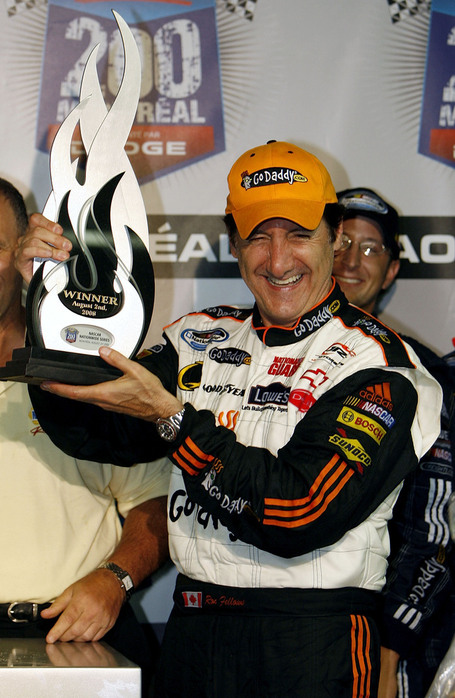
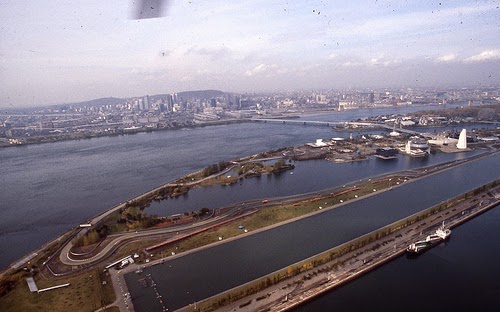
Earlier in his life, Fellows found a love for French-Canadian Formula 1 driver Gilles Villeneuve. Fellows has one of the biggest collections of Gilles Villeneuve merchandise in Canada and called Villeneuve his idol. To attend F1 races at a young age, Fellows went to watch them at a local track on an island in Montreal Canada named Île Notre-Dame, a track that eventually would be named Circuit Gilles Villeneuve. When Villeneuve died in 1982 the track was named after Villeneuve himself. Fellows developed a dream to win at Circuit Gilles Villeneuve when he became a racing driver. He accomplished his goal in 2008, winning the NASCAR Nationwide Series race at the track the NAPA Auto Parts 200.
(Photo; sbnation.com)
As a result of his big win Fellows was given the #5 JR Motorsports crew for a multi-year deal. He drove for JR Motorsports through 2009 and 2010 for the road course races.

Fellows returned to the NNS in 2011 with JR Motorsports getting a NNS full-time ride for the first time since 2006. Driving the briefly renumbered #7 AER Manufacturing Chevrolet, he was in contention to win the Bucyrus 200 at Road America. He took the lead from Justin Allgaier, who had run out of fuel previously, passing Reed Sorenson in the process. However, NASCAR ruled that Fellows had passed both drivers under the caution flag way too fast. Believing that Sorenson slowed due to also being out of fuel, Fellows drove past them at nearly race speed until he was leading the caution to the pace lap, though NASCAR rules stipulate that a driver must maintain reasonable speed while under the caution flag (Speeding is not reasonable caution speed anymore). As a result, Fellows was relegated to second place post-race, handing the win to Sorenson. To this day Fellows maintains that he should have won the race.


The next year, Fellows couldn't land a ride for the Sprint Cup series but ran the Nationwide Series road course races for JR Motorsports. Fellows led 4 laps at Road America and finished 3rd. He finished 5th at Watkins Glen and 5th in Montreal.

Fellows returned to the Cup series in 2013. He drove the No. 33 car for Circle Sport Racing. His best finish was at Infineon Raceway, when he finished 22nd.

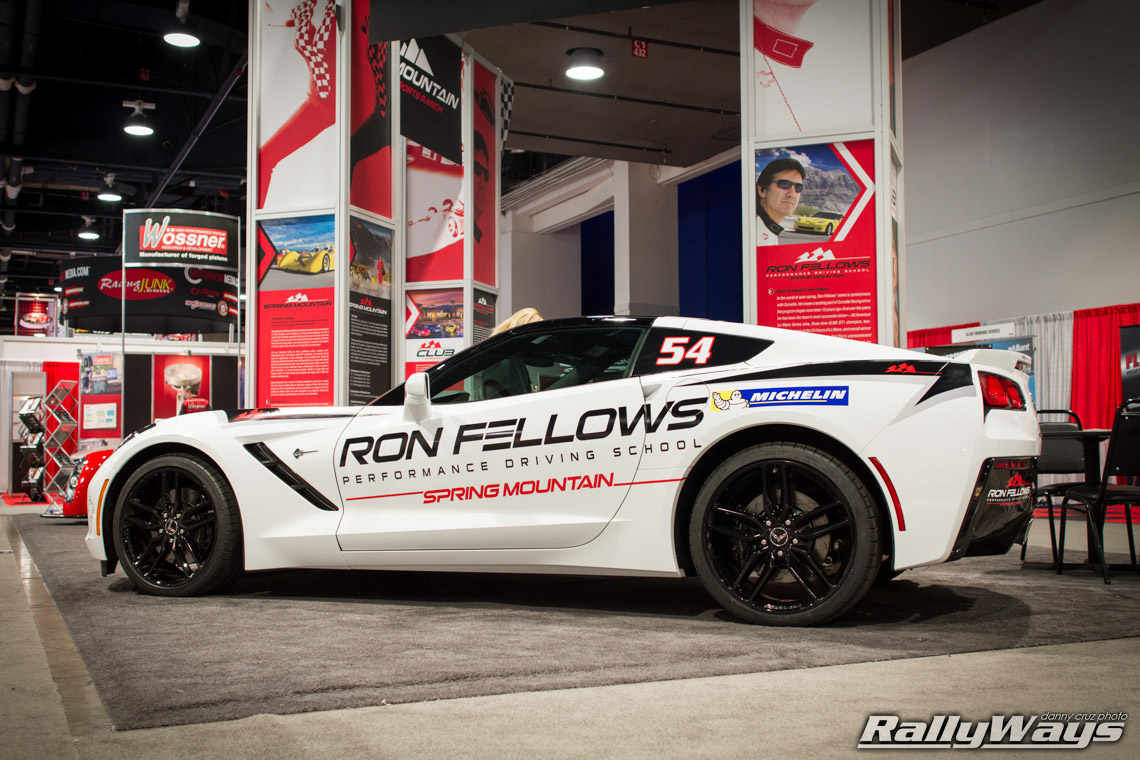
Besides his racing career, Fellows owns a corporate business chain the Ron Fellows Performance Driving Schools and is one of the owners of car brand, Corvette as well as Corvette's racing operations.
(Photo; rallyways.com)
He also owns a charity called the Sunoco-Ron Fellows Karting Championship to help young kids become race-car drivers. On June 1, 2011, it was announced that Fellows, along with partners Carlo Fidani and Allan Boughton had formed Canadian Motorsport Ventures Ltd., which had just completed the purchase of Mosport International Raceway, north of Bowmanville, Ontario, Canada. NASCAR hosted a truck series race there-the first time since 2000 that the truck series came to a road course. Fellows' current goal for his track is to bring the Cup series to the track someday.
(Photo; marketwired.com)
He and wife Lynda have 3 children, Lyndsay, Sam and Patrick Fellows. Ron lives outside of Toronto, and like many Canadians, he has a deep passion for hockey, especially the Toronto Maple Leafs. His son Patrick plays for the Erie Otters of the Ontario Hockey League.
(Photo; ottershockey.com)
Patrick Fellows

Ron was inducted into the Canadian Motorsport Hall of Fame in 2012.


"Canadian Motorsport Hall of Famer" Ron Fellows Born - September 28, 1959

September 28, 1959
Ron Fellows
Born in Windsor, Ontario, Canada.
Canadian Motorsport Hall of Fame member, accomplished SCCA Trans-Am, IMSA, and American Le Mans Series driver, and a NASCAR "road course ringer".

Fellows at the age of 4 became interested in auto racing with his family. He found a love for French-Canadian Formula 1 driver Gilles Villeneuve. Fellows has one of the biggest collections of Gilles Villeneuve merchandise in Canada and called Villeneuve his idol. To attend F1 races at a young age, Fellows went to watch them at a local track on an island in Montreal, Canada named Île Notre-Dame, a track that eventually would be named Circuit Gilles Villeneuve. When Villeneuve died in 1982 the track was named after Villeneuve himself. Fellows developed a dream to win at Circuit Gilles Villeneuve when he became a racing driver. He accomplished his goal in 2008, winning the NASCAR Nationwide Series race at the track the NAPA Auto Parts 200.

Besides his racing career, Fellows owns a corporate business chain the Ron Fellows Performance Driving Schools and is one of the owners of car brand, Corvette as well as Corvette's racing operations. He also owns a charity called the Sunoco-Ron Fellows Karting Championship to help young kids become race-car drivers. In January 2013, Ron Fellows purchased the Canadian Tire Motorsports Park racetrack and NASCAR hosted a truck series race there-the first time since 2000 that the truck series came to a road course. Fellows' current goal for his track is to bring the Cup series to the track someday.

He and wife Lynda  have 3 children, Lyndsay, Sam and Patrick Fellows. Ron is a close friend of Dale Earnhardt Jr. as well as Gilles Villeneuve's son Jacques who was a student in a racing school with Ron.

See also: Tribute To Ron Fellows

Friday, September 27, 2019

Jacques Laffite Wins, Villeneuve 3rd At Canadian Grand Prix - September 27, 1981

September 27, 1981
Frenchman Jacques Laffite took what was to be his last F1 victory, winning the "Labatt" Grand Prix of Canada, at Circuit Gilles Villeneuve, Montreal, Quebec. Laffite was joined on the podium by John Watson in second and  Canada's own Gilles Villeneuve in third. Villeneuve's younger brother Jacques failed to qualify for the Arrows team.

The Circuit Gilles Villeneuve 

Hunter Jones Born In Thunder Bay, Ontario

September 27, 1968
Hunter Jones
(Photo; comicozzie.com)
Born in Thunder Bay, Ontario, Canada.
A former CART "Indy Lights" driver, Hunter is the son of Canadian Motorsport Hall of Fame member Tom Jones and the brother of former CART driver John Jones.

Tuesday, September 24, 2019

"Canadian Motorsport Hall Of Famer" Bob McLean Born - September 24, 1933

September 24, 1933 - March 26, 1966
Bob McLean
(Photo; www.thecoralsnake.com)
Born:Australia, Home: Vancouver, BC, Canada.
Bob started his driving career in 1957 with an MGA, racing frequently at his home track, the very new Westwood Racing Circuit in Coquitlam, located close to his hometown of Vancouver British Columbia. By all measures, McLean was well liked and respected on the road racing circuits.

In 1965, McLean set out with his 1.6 litre twin-cam powered Lotus 23B to conquer the Canadian Driving Championships, a venture which would see him travel extensively. By air and by ground he travelled to every national event that year, covering nearly 100,000 kilometres. After a season of dominant performances, he was successful at winning the Championship, a remarkable accomplishment considering the eastern Canadian "establishment" drivers and their bigger and faster cars.

Early in 1966, Bob McLean earned a spot with the Comstock Racing Team, a Canadian endurance-racing team. Sharing the driving with fellow Canadian driver Jean Oulette, they piloted one of the team's two Ford GT40s in the 16th Annual Sebring 12 Hour Grand Prix of Endurance for the Alitalia Cup race at Sebring International Raceway in Sebring, Florida. This was a showdown battle between Ford and Ferrari. Shortly after McLean took over driving duties in the fourth hour of the race, his Ford GT40 crashed into a utility power pole and exploded into flames, killing McLean.

Bob McLean left behind his wife Kathie and their two young children. McLean's death was a huge blow to the motorsport community. The funeral procession to his final resting place in Burnaby included a line of cars that reportedly stretched out some two miles, a testament to the fact that he was well admired.

McLean was inducted into the Canadian Motorsport Hall of Fame in 1993. In more recent years, McLean was featured in a Peter Lipskis documentary entitled King of Westwood.

Wednesday, September 18, 2019

"Canadian Motorsport Hall of Famer" Earl Ross Dies - September 18th, 2014

September 4, 1941 - September 18th, 2014 
Earl Ross
( Photo:PEI Sports Hall of Fame)
Born in Fortune, Prince Edward Island, Canada.
A Canadian Motorsport Hall of Fame and  Maritime Motorsports Hall of Fame member, Earl is the only Canadian to have won a NASCAR Cup Series race. Earl started his racing career in the late 1960's, driving hobby cars, then he began racing a late model stock car for the McKichan brothers at Delaware Speedway.

He was known for being one of only four non-American drivers to have won a NASCAR Cup Series race, the others being Juan Pablo Montoya, Mario Andretti, and Marcos Ambrose. Ross' only NASCAR win came at Martinsville Speedway on September 29, 1974 during the Old Dominion 500. His car was owned by the legendary Junior Johnson and sponsored by the Canadian-owned Carling-O’Keefe Breweries. After qualifying 11th, Ross beat Buddy Baker to the line by more than a lap, thus making him the first and still the only Canadian to have ever won a Winston Cup event. Ron Fellows however has wins in the Nationwide Series and the Camping World Truck Series. At that time, Earl was the first rookie to win a Grand National race since Richard Petty accomplished the feat several years earlier.

The win was the push needed for Ross, who could only afford to run a partial schedule, to win the Winston Cup "Rookie of the Year" in 1974. After competing in only 2 events in '75 and '76, Ross retired from NASCAR racing. He recorded 1 win, 5 top-5's and 10 top 10's in 26 races.

Ross competed in a number of regional racing series throughout the 1960s, 1970s, 1980s and 1990s, including time on the ASA circuit (Bob Senneker, Mark Martin, Rusty Wallace and Alan Kulwicki were competing at the same time) and CASCAR Super Series (which later became the NASCAR Canadian Tire Series) against Canadian legends like Don Thomson Jr. He also participated in regular Friday night racing at Delaware Speedway before his ultimate retirement in the late 1990s.

Earl Ross died on Thursday, September 18th, 2014, at his home in Ailsa Craig, Ontario, Canada. He was the age of 73.

In a statement released in Daytona Beach, NASCAR paid tribute to the Canadian.
“NASCAR extends its condolences to the family and friends of Earl Ross, a true racer whose considerable on-track success helped grow the sport internationally."

“Ross was the first Canadian driver to win a race in what is today known as the NASCAR Sprint Cup Series, and he did it at one of NASCAR’s most historic tracks for one of NASCAR's most historic owners. His 1974 win at Martinsville for Junior Johnson helped lay the foundation for the sport's tremendous growth in Canada, and beyond.”

Earl Ross was inducted into the the P.E.I. Sports Hall Of Fame in 2008, the Canadian Motorsport Hall of Fame in 2000, and the Maritime Motorsports Hall of Fame in 2011

For more check out; Norris McDonald on Earl Ross at wheels.ca

"Canadian Motorsport Hall Of Famer" Billy Foster Born - September 18, 1937

September 18, 1937 - January 20, 1967
Billy Foster

Born in Victoria, British Columbia.
Besides driving in NASCAR, Foster also drove in the USAC Championship Car series, racing in the 1964-1966 seasons, with 28 career starts including the 1965 and 1966 Indianapolis 500 races, making him the first Canadian to race in the "Indy 500". He finished in the top ten 10 times, with his best finish in 2nd position in 1966 at Atlanta.

Foster died in a crash during practice for a NASCAR stock car race at Riverside International Raceway in Riverside, California. Foster is the only Canadian racing driver to have been fatally injured at a NASCAR event.

He and Mario Andretti became best of friends, building a close relationship which Andretti claimed he would never do again with a fellow racer because Foster's death so significantly affected him.

Foster was cousins with musician, producer, composer, arranger David Foster and with Canadian stock car driver Jim Steen.

He was inducted into the Victoria Auto Racing Hall of Fame in 1984 and the Canadian Motorsport Hall of Fame in 1993.

Sunday, September 15, 2019

Miaskiewicz Edges Kroll At Mosport Can-Am - September 15, 1985

September 15, 1985
The SCCA Can-Am Challenge at Mosport, saw polesitter Horst Kroll jump to an early lead over Championship leader Rick Miaskiewicz. Following a routine stop while exiting pit lane a Miaskiewicz crew member accidentally stepped in Kroll's path and forced him to stand on the brakes to avoid contact. As an angry Kroll jumped back on the throttle the car spun and stalled on the pit exit. As he watch Miaskiewicz drive off with the lead and the rest of the field in tow a frustrated Kroll coasted down the hill to corner one and jump started the car. Over half a minute behind the leader the race seemed all but over, but for anyone who knows Horst, the word quit is not in his vocabulary.

With the race winding down and Horst on a blistering pace, the pit-board messages informed Kroll of Miaskiewicz's decreasing lead. On the closing laps with ever increasing pressure from Kroll, Miaskiewicz had a brief encounter off track at Moss corner leaving Horst breathing down his neck as he crossed the finish line. 

It was now off to St Louis with Miaskiewicz and Kroll locked in a dogfight for the championship. 

Saturday, September 14, 2019

Tracy Wins, Kroll Claims Can-Am Title - September 14, 1986

Continued from} 17-Year-Old Paul Tracy Grabs Can-Am Pole - September 13th, 1986


Mosport - September 14th, 1986

Horst Kroll
Following a late night at the shop a tired crew were at the track early Sunday morning to work on the race setup. Having not spoken to Tracy yet, and with only a few hours sleep, a tired Kroll was focused on his own job at hand, finishing ahead of Bill Tempero, and the championship he had chased for so many years would be his.

The start of race would quickly have concerns for Kroll. As he entered corner one the oil light came on causing him to back of the gas and championship rival Bill Tempero slipped into second behind Tracy. From his vantage point, Kroll could only watch in disbelief, "He's leading the race, Tempero is behind him, and I am forced to sit back" Kroll said with a laugh later, "Oh my God, there goes my championship, he's going to stick with Paul"

Lap ten saw Tempero grabbed the lead briefly. "Paul going off the track in corner 5, through the cars, bits are flying" says the wily veteran, knowing his only option is to hang back and finish, "Tempero has the lead and I just have to sit back and watch him win" However, Paul fought back regaining the lead two laps later with a nice move on the inside of corner 8. Paul never looked back as he held the lead the rest of the way to become the youngest winner in Can-Am history.

Things got even sweeter for Kroll as Tempero drop out with clutch failure. Horst reclaimed the number two position for another HKRacing 1-2 finish and finally the Can-Am Championship he had chased for so many years. With this race Horst would also go into the Can-Am record book with the most consecutive finishes in series history at 22.

 After the SCCA took back control of the series, the Can-Am Teams (CAT) declared their independence and devised a championship that included the four existing Can-Am races plus an extra race at Hallett, Oklahoma, in October in which Horst was declared the CAT Champion also.

 More about the Paul Tracy weekend can be found in Kroll's interview with author Paul Ferriss in the book, "Never Too Fast: The Paul Tracy Story"


Friday, September 13, 2019

17-Year-Old Paul Tracy Grabs Can-Am Pole - September 13th, 1986

Mosport - September 13th, 1986
17-year-old up and coming star Paul Tracy, wasted little time in grabbing the attention of a field of veteran Can-Am drivers. After being forced to sit out his scheduled testing the day before, the eager teenager quickly found the pace and left the track that evening with the pole position locked up.

After a typical September rain, the cautious team owner Horst Kroll forced the eager young driver to sit the day before. Taking the car around the track himself for 4 laps and satisfied with the performance, Kroll turn it over to Tracy.

Calm and experienced, Kroll had driven Mosport many times over his 25-year career. With Tracy having only one session to adjust to the bigger car and some 400 plus horsepower over his regular F-2000 ride, Kroll felt it necessary to help the young driver. In Krolls own words "Paul, I would like you to drive behind me and we'll get faster every lap" Kroll was aware of Tracy's reputation for on-track aggression, but was shocked when the young driver showed he was more than ready for the challenge. After a few laps Kroll decided "Goodbye Paul, I put my foot in it and do a lap, I look in my mirror and this kid is behind me" Say's Horst "Every time I stepped it up a notch the kid was still in my mirror. I could not shake him. I knew then and there he had talent."

After satisfying results with Paul edging Horst for the pole, however the Kroll Racing team were in for a busy night. On the closing laps of Saturday qualifying, a strong crosswind spun Kroll into a guardrail between corners 8 and 9 and the car facing the track. Horst jumped out of the car just in time to watch a hard charging Tracy slam into it, sending the crew back to Kroll's shop for a long night and two cars to repair. To be continued.

Wednesday, September 11, 2019

Jacques Villeneuve Wins At Road America - September 11, 1994

September 11, 1994
Canadian Jacques Villeneuve driving the Player's/Forsythe Green Racing entry finished .609 seconds ahead of Al Unser Jr., to win the CART "Texaco/Havoline 200" at Road America, Elkhart Lake, Wisconsin, USA. Villeneuve inherited the lead after fellow countryman Paul Tracy lost an engine. Tracy started from the pole and led the first 35 laps in the Marlboro/Roger Penske entry. Other Canadians in the field were Scott Goodyear (7th) and Claude Bourbonnais (Crash).  

Tuesday, September 10, 2019

Paul Tracy Finishes Second At Monterey - September 10, 1995

September 10, 1995
Gil de Ferran, driving the Pennzoil sponsored Jim Hall Reynard/Mercedes, finished 7.959 seconds ahead of Paul Tracy of Toronto in the Newman Haas Racing Lola/Ford, to win the CART "Toyota Grand Prix of Monterey" at Laguna Seca Raceway, Monterey, California, USA. The other Canadian in the field, polesitter Jacques Villeneuve, finished 11th in the Player's/Team Green entry after leading the first 28 laps. 

Monday, September 09, 2019

"Former CART & IMSA Driver" Ludwig Heimrath Jr. Born - September 9, 1956

September 9, 1956
Ludwig Heimrath Jr.
(Photo; public.fotki.com)
Born in Scarborough, Ontario.
Former CART driver and son of Canadian Motorsport Hall of Fame member Ludwig Heimrath Sr., Junior started his driving career racing Go-karts and Formula Fords. In 1979 and 1980 he won the Ontario Formula Ford Championship winning seven races in total.

In 1981 and 1982, he competed in selected International Motorsport Association (IMSA) races. In 1983, he competed in the Robert Bosch Super Vee Series. Ludwig was named "Rookie of the Year" winning a race and two pole positions. He also drove a prototype in the 24 hr of LeMans that year. In 1984, he won three races and three pole positions racing Super Vees. The next several years, Ludwig competed in the IMSA GTP Series and drove a factory supported Porsche in Trans-Am.

Starting in 1987 through 1989 Ludwig competed in selected CART races. In 1987, at the Indy 500, he was the fastest qualifier the second weekend, qualifying 10th. His highest finish at the Indy 500 was 13th.

Ludwig graduated as an engineer from Ryerson Polytechnical Institute. He currently owns and operates All-Composite Inc., a composite manufacturing company in the Pacific Northwest. He also is a college composite technology instructor and consultant. 

Ludwig is married to Kathy Rude, the first woman to win a major international sports car race, a GTU class win at 24 Hours of Daytona in 1982 with Lee Mueller and Allan Moffat. 

"Happy Birthday" Canadian Hall of Famer Junior Hanley- September 9, 1944

September 9, 1944
Junior Hanley
(Photo; by Mike F. Campbell 76wins)
Born in Port Mouton, Nova Scotia.
Junior migrated to Ontario in the early 70's at the suggestion of his friend and rival Don Biederman. He is widely regarded by his racing peers to be the best Canadian short track racer of his time, and in general is at the top of most peoples list in hailed short track racers in North America.

An expert racer, chassis builder and setup man, Junior has made a living from racing and building cars since the mid seventies. He has built race cars for drivers such as Bill Elliott, Dale Earnhardt, Alan Kulwicki, Mark Martin, Kyle Petty, Dick Trickle and Darrell Waltrip.

Hanley won the 1991, 1992, and 1993 American Canadian Tour (ACT) Championships. He was inducted into the Canadian Motorsport Hall of Fame in 2000, and the Maritime Motorsports Hall of Fame in 2011.

Thursday, September 05, 2019

Gilles Villeneuve Drives to Victory In Trois-Rivieres - September 5, 1976

September 5, 1976
(Photo;motorsportmagazine.com)
In a non-championship Formula Atlantic race through the streets of Trois Rivieres, Quebec, Gilles Villeneuve driving a March 76B, not only added another win to his belt but he also defeated a brace of F1 drivers led by Alan Jones and defending world champion James Hunt. Both were mightily impressed with Villeneuve's driving and when Hunt got home he raved about Gilles to McLaren bosses Teddy Mayer and Tyler Alexander, and to sponsor Marlboro too. 

Hunt's enthusiasm convinced Mayer and Alexander to give Villeneuve a try and after a fast, spin-filled test he made his F1 debut in the 1977 British GP at Silverstone. A fantastic showing was muffled by a faulty water temperature gauge which forced Villeneuve to make a pitstop. But as fast as he clearly was Teddy Mayer believed Gilles would crash too many cars and the relationship cooled. As the season wore on, Mayer decided to hire Patrick Tambay instead of Villeneuve. 

Meanwhile, back in North America, Gilles's was able to wrap-up the Formula Atlantic  Championship with a win in Quebec City. The next day Gilles and his manager flew to Italy to sign a two-year contract with Ferrari and two weeks later he would make his Ferrari debut in the Canadian GP at Mosport.

This Day In Motorsport History - Home Page

Wednesday, September 04, 2019

"Canadian Hall Of Famer" Earl Ross Born - September 4, 1941

September 4, 1941 - September 18th, 2014 
Earl Ross
(PEI Sports Hall of Fame)
Born in Fortune, Prince Edward Island, Canada.
A Canadian Motorsport Hall of Fame and  Maritime Motorsports Hall of Fame member, Earl is the only Canadian to have won a NASCAR Cup Series race. Earl started his racing career in the late 1960's, driving hobby cars, then he began racing a late model stock car for the McKichan brothers at Delaware Speedway.

He was known for being one of only four non-American drivers to have won a NASCAR Cup Series race (the others being Juan Pablo Montoya, Mario Andretti, and Marcos Ambrose). Ross' only NASCAR win came at Martinsville Speedway on September 29, 1974 during the Old Dominion 500. His car was owned by the legendary Junior Johnson and sponsored by the Canadian-owned Carling-O’Keefe Breweries. After qualifying 11th, Ross beat Buddy Baker to the line by more than a lap, thus making him the first and still the only Canadian to have ever won a Winston Cup event. Ron Fellows however has wins in the Nationwide Series and the Camping World Truck Series. At that time, Earl was the first rookie to win a Grand National race since Richard Petty accomplished the feat several years earlier.

The win was the push needed for Ross, who could only afford to run a partial schedule, win the Winston Cup "Rookie of the Year" in 1974. After competing in only 2 events in '75 and '76, Ross retired from NASCAR racing. He recorded 1 win, 5 top-5's and 10 top 10's in 26 races.

Ross competed in a number of regional racing series throughout the 1960s, 1970s, 1980s and 1990s, including time on the ASA circuit (Bob Senneker, Mark Martin, Rusty Wallace and Alan Kulwicki were competing at the same time) and CASCAR Super Series (which later became the NASCAR Canadian Tire Series) against Canadian legends like Don Thomson Jr. He also participated in regular Friday night racing at Delaware Speedway before his ultimate retirement in the late 1990s.

Earl Ross died on Thursday, September 18th, 2014, at his home in Ailsa Craig, Ontario, Canada. He was the age of 73.

In a statement released in Daytona Beach, NASCAR paid tribute to the Canadian.
“NASCAR extends its condolences to the family and friends of Earl Ross, a true racer whose considerable on-track success helped grow the sport internationally."

“Ross was the first Canadian driver to win a race in what is today known as the NASCAR Sprint Cup Series, and he did it at one of NASCAR’s most historic tracks for one of NASCAR's most historic owners. His 1974 win at Martinsville for Junior Johnson helped lay the foundation for the sport's tremendous growth in Canada, and beyond.”

Earl Ross was inducted into the the P.E.I. Sports Hall Of Fame in 2008, the Canadian Motorsport Hall of Fame in 2000, and the Maritime Motorsports Hall of Fame in 2011

For more check out; Norris McDonald on Earl Ross at wheels.ca

Tuesday, September 03, 2019

Paul Tracy Wins Molson Indy Vancouver - September 3rd, 2000

September 3rd, 2000
(Photo;pinterest.com)
Paul Tracy of Toronto finished .384 seconds ahead of Kool/Team Green teammate Dario Franchitti to win the CART "Molson Indy Vancouver" at Pacific Place, Vancouver, British Columbia, Canada.

There were mixed feelings in the Team KOOL Green camp after the squad's dominant one-two victory. Winner Paul Tracy was overjoyed to have won in front of his rabidly enthusiastic home fans, but runner-up Dario Franchitti was left frustrated after losing the lead when he stalled in the pits. Tracy, who had been suffering all weekend with a fever, said he didn't think he had a chance to beat his team-mate.

"We were catching Dario a little bit but it seemed like things were going his way until the pit stop," said Tracy. "Winning in Toronto in 1993 was the biggest race of my career and this is as good as that."

Franchitti blamed difficulty with the pit lane speed limiter system for the incident that cost him victory. "I'm pretty disappointed," he said. "I've been using a different pit lane limiter. I didn't like it but the team told me to use it. I dropped the clutch and the engine just died."

The Scotsman also sounded frustrated by the team decision to order the two drivers to hold position in the closing stages. "I was going fast enough to keep Paul honest but I knew I wasn't allowed to pass him," he said.

Team boss Barry Green played down the significance of the team orders. "Our rules are that whoever comes out ahead after the final pit stops will come home in front," he said, "unless we're getting pressure from the rear. We didn't get a lot of pressure from anyone today though, it's a great day for the team."

The other Canadians in the field both had disappointing days. Patrick Carpentier was involved in a crash on lap 3 and his Player's/Forsythe teammate Alex Tagliani dropped out on Lap 63 with a broken suspension.


Monday, September 02, 2019

"Midget & Sprint Legend" Bert Brooks Dies In Crash - September 2, 1968

March 20, 1920 - September 2, 1968
Bert Brooks
Born in Fredericton, New Brunswick.
Bert Brooks was a motorcycle racer before World War II. Following the war, Bert tried his hand at midget racing. Bert competed in midgets and sprints from Florida to Maine.

Brooks was one of the countries premier Midget drivers during the busy post-war era. His first race was at Danbury CT. in 1945. In the early years, he drove a Ford-powered car and often won the non-Offenhauser championship. He joined the United Racing Club sprint car circuit in 1954 and won the championship four times, including three consecutive years - 1956, 1957 and 1958. He switched back to the ARDC midgets in 1959.

Like many of the open-wheel specialists of his era, Bert Brooks also spent a limited amount of time wheeling stock cars, a division whose popularity was on the rise. Due to a variety of reasons, the Coupes would become the main weekly fare all across New England with the “Mighty Midgets” becoming primarily a traveling circuit.

In 1961 Brooks attempted to qualify for the Indianapolis 500. He passed the rookie test but was too slow to make the field in the Hall-Mar Curtis-Offy. He also tried to qualify at Milwaukee the week after Indy, but again was too slow, this time in the Eelco Custom Shaft Kuzma-Offy. Later that year he suffered a mangled arm in a wreck at Flemington.

His 23 year career came to an end following a violent multi-car crash during an ARDC Labor Day event at Hershey (PA), Stadium in 1968. In 2009 Bert Brooks was inducted into the New England Auto Racing Hall of Fame.